Small Business Set-Asides & Opportunities
Federal Procurement Framework
Federal procurement regulations require agencies to reserve a specific percentage of contract dollars for small businesses. These "set-asides" ensure that small business concerns have an equitable opportunity to compete for and win government contracts. For the 2026 fiscal year, the government-wide goal for small business prime contracting remains at 23%.
The Small Business Administration (SBA) and the Federal Acquisition Regulation (FAR) dictate the mandatory use of set-asides for acquisitions exceeding the simplified acquisition threshold. These mechanisms facilitate economic growth and maintain a robust industrial base by supporting specialized and localized firms.
Socioeconomic Categories and Goals
Federal agencies utilize several socioeconomic programs to meet statutory contracting goals. Each category carries specific eligibility requirements and annual percentage targets.
8(a) Business Development Program
The 8(a) program supports firms owned and controlled by socially and economically disadvantaged individuals.
Goal: 5% of all federal contracting dollars.
Duration: Nine-year program term.
Mechanism: Sole-source awards and competitive set-asides.
HUBZone Program
The Historically Underutilized Business Zone (HUBZone) program targets businesses located in and employing residents of economically distressed areas.
Goal: 3% of all federal contracting dollars.
Benefits: 10% price evaluation preference in full and open competitions.
Requirement: Principal office must be in a HUBZone; 35% of employees must reside in a HUBZone.
Service-Disabled Veteran-Owned Small Business (SDVOSB)
The SDVOSB program provides contracting opportunities for businesses owned by veterans with service-connected disabilities.
Goal: 3% of all federal contracting dollars.
Oversight: SBA certification is mandatory for federal set-asides.
Priority: The Department of Veterans Affairs (VA) operates under a "Veterans First" hierarchy, prioritizing SDVOSBs above other categories.
Women-Owned Small Business (WOSB)
The WOSB program targets firms owned and controlled by women to increase their participation in underrepresented industries.
Goal: 5% of all federal contracting dollars.
Expansion: 2026 federal initiatives include expanding the list of NAICS codes eligible for WOSB set-asides.
2026 Agency Priorities
Agency-specific scorecards drive procurement behavior in 2026. The Department of Defense (DoD), Department of Veterans Affairs (VA), and Department of Homeland Security (DHS) have established aggressive small business utilization strategies.
Department of Defense (DoD)
The DoD is the largest federal buyer and utilizes set-asides extensively for facility maintenance, infrastructure repair, and secure facility construction. Current trends indicate a shift toward using large-scale Indefinite Delivery/Indefinite Quantity (IDIQ) contracts with dedicated small business on-ramps.
Department of Veterans Affairs (VA)
VA procurement remains focused on the SDVOSB community. Infrastructure investments in medical centers and clinics require a network of qualified subcontractors capable of operating within clinical environments while maintaining federal compliance.
Department of Homeland Security (DHS)
DHS prioritizes HUBZone and 8(a) participation for border infrastructure and facility modernization projects. The agency utilizes category management to streamline acquisitions, making access to established vehicles critical for small firms.
Panacea Construction Group: The Force Multiplier
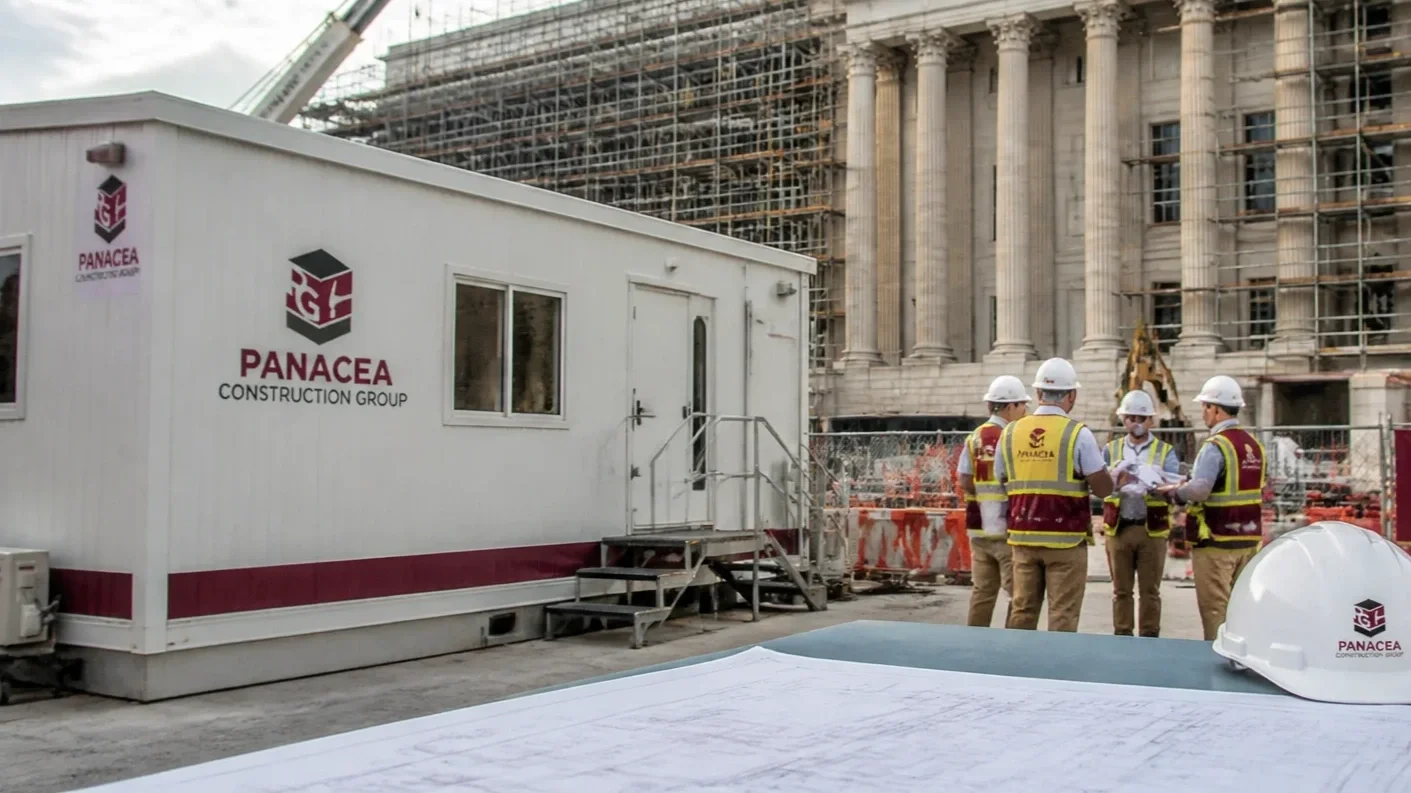
Panacea Construction Group is a certified SDVOSB and HUBZone general contractor. We serve as a "force multiplier" for small business subcontractors by winning prime set-aside contracts that might otherwise be inaccessible to smaller firms.
Our position as a prime contractor on federal agency contracts allows our partners to gain experience on complex government projects. We manage the administrative and compliance burdens of federal work, allowing subcontractors to focus on their technical specialties.
"Our mission is to build our clients’ vision in a clean and professional manner while consistently providing best-in-class customer service."
Similarly Situated Entities (13 CFR 125.1)
The "Similarly Situated Entity" (SSE) rule is a critical tool for small business teams. Under 13 CFR 125.1, a subcontractor is considered "similarly situated" if they hold the same socioeconomic status as the prime contractor for the specific set-aside category.
Performance of Work Requirements
Small business primes must perform a minimum percentage of the work on set-aside contracts.
General Construction: Prime must perform at least 15% of the contract value (excluding materials).
Specialty Trade Construction: Prime must perform at least 25% of the contract value (excluding materials).
The SSE Advantage
Work performed by a similarly situated subcontractor counts toward the prime contractor’s performance-of-work requirement. This allows an SDVOSB prime to subcontract a significant portion of a project to another SDVOSB without violating the "Limitations on Subcontracting" clause. This regulation enables specialized small businesses to collaborate on high-value projects while remaining compliant.
Bid-Readiness Requirements
To participate in the federal market, subcontractors must maintain "bid-ready" status. Failure to maintain these records results in immediate disqualification from federal opportunities.
SAM.gov Registration
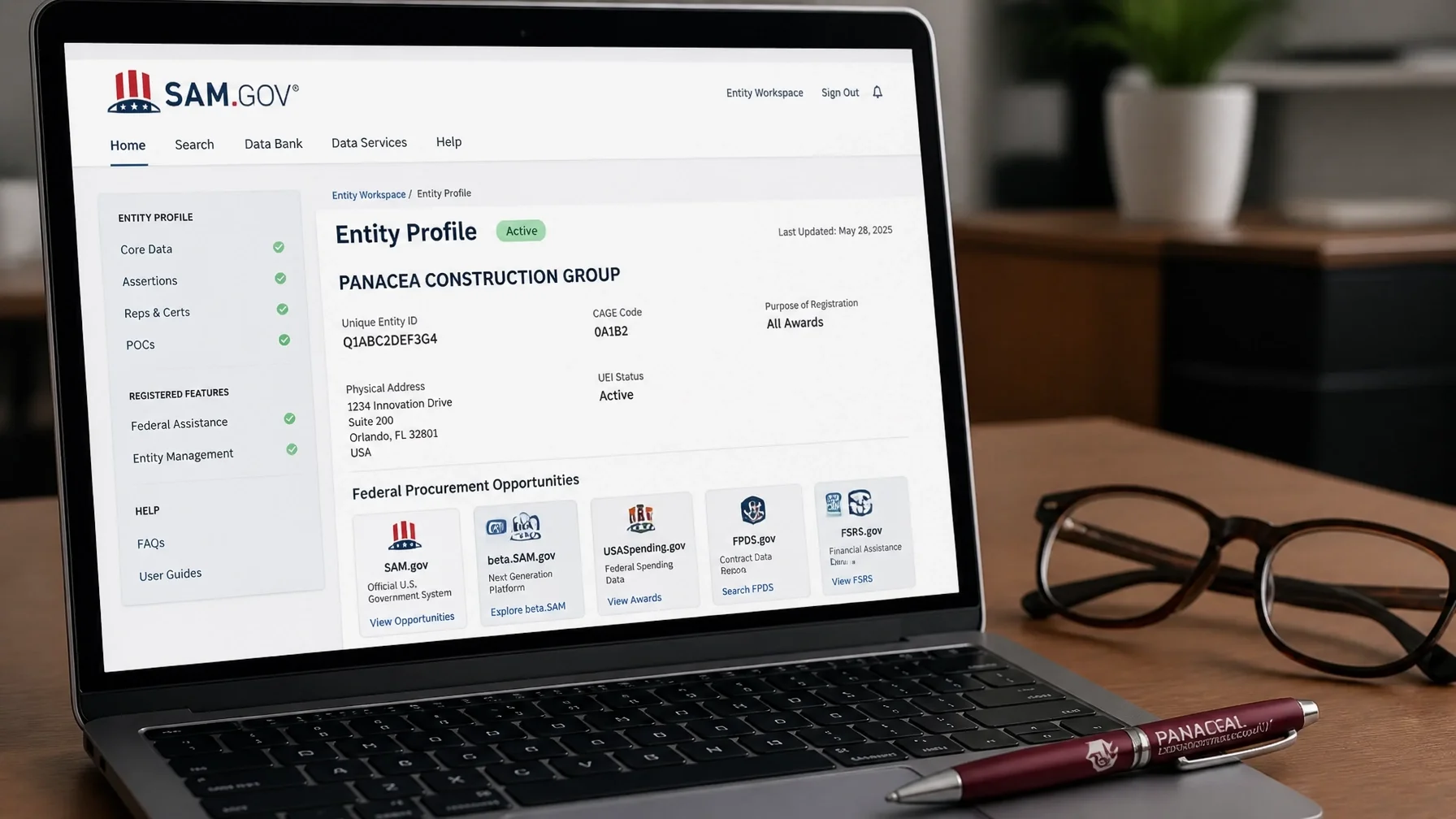
All firms must maintain an active registration in the System for Award Management (SAM.gov).
Unique Entity ID (UEI): Required for all federal subcontracting.
Representations and Certifications: Must be updated annually.
Status: Ensure "Purpose of Registration" includes "All Awards."
NAICS Code Accuracy
Firms must identify the correct North American Industry Classification System (NAICS) codes for their specific trade.
For example:
236220: Commercial and Institutional Building Construction.
238210: Electrical Contractors and Other Wiring Installation Contractors.
238220: Plumbing, Heating, and Air-Conditioning Contractors.
Documentation Checklist
Current safety manual and EMR rating.
Relevant project past performance (including CPARS if available).
Current financial statements and bonding capacity.
Proof of socioeconomic certifications (SBA Letter, VetCert).
Subcontractor Onboarding and Partnerships
Panacea Construction Group is actively looking for qualified subcontractors to join our partner network. We seek firms that share our core values: Faith, Leadership, Servitude, Integrity, and Courage.
Our subcontractor onboarding process is designed to vet partners for technical competence, financial stability, and federal compliance. We prioritize relationships with small businesses that are ready to perform on high-stakes government construction projects.