The Impact of Inflation on Contract Pricing
2026 Construction Market Overview
Inflation remains a primary operational variable in the 2026 federal construction sector. Material shortages and labor cost fluctuations continue to influence the fiscal feasibility of long-term projects. As a General Contractor, Panacea Construction Group prioritizes the identification of economic risks early in the procurement process to ensure project continuity and financial stability.
The federal government remains the primary consumer of construction services. However, the volatility of the current market necessitates a shift in how contracts are priced and managed. Subcontractors must understand the mechanisms used to mitigate these risks to remain competitive and profitable.
Risk Allocation in Fixed-Price Contracts
Firm-Fixed-Price (FFP) contracts are the standard for most federal construction procurements. In an FFP environment, the contractor assumes the majority of the risk associated with cost increases. If material prices rise after the contract award, the contractor is typically responsible for covering the difference.
Current Challenges with FFP Agreements
Cost Erosion: Rapid increases in the price of steel, copper, and concrete can eliminate profit margins.
Predictability Issues: Fixed-price models require high levels of certainty that are difficult to achieve in volatile markets.
Contingency Loading: Subcontractors often increase bid prices to account for potential inflation, which may lead to uncompetitive proposals.
Economic Price Adjustment (EPA) Clauses
To address the limitations of Fixed-Price contracts, federal agencies utilize Economic Price Adjustment (EPA) clauses. These clauses allow for the modification of the contract price based on specific economic conditions, such as fluctuations in labor or material costs.
FAR 52.216-4: Labor and Material Mechanics
The Federal Acquisition Regulation (FAR) 52.216-4 is a primary tool for managing inflation. This clause permits adjustments to the contract price for specified labor and material costs.
Upward Adjustments: Occur when the cost of specified items increases beyond the baseline established in the contract.
Downward Adjustments: Occur if prices decrease, ensuring the government receives fair market value.
Eligibility: Only labor and material items explicitly listed in the contract schedule are eligible for adjustment.
Thresholds and Caps: The 3% and 10% Rules
The application of FAR 52.216-4 involves specific quantitative limits to prevent minor fluctuations from triggering administrative burdens while protecting against extreme volatility.
The 3% Threshold
No adjustment is made under the EPA clause unless the net change in labor or material rates results in at least a 3% change in the total contract price. This serves as a buffer for standard market minor fluctuations.
The 10% Cap
The total of all upward adjustments is generally capped at 10% of the original unit price. This provides the government with a predictable maximum expenditure while offering the contractor a significant level of protection against runaway inflation.
Tracking Economic Data
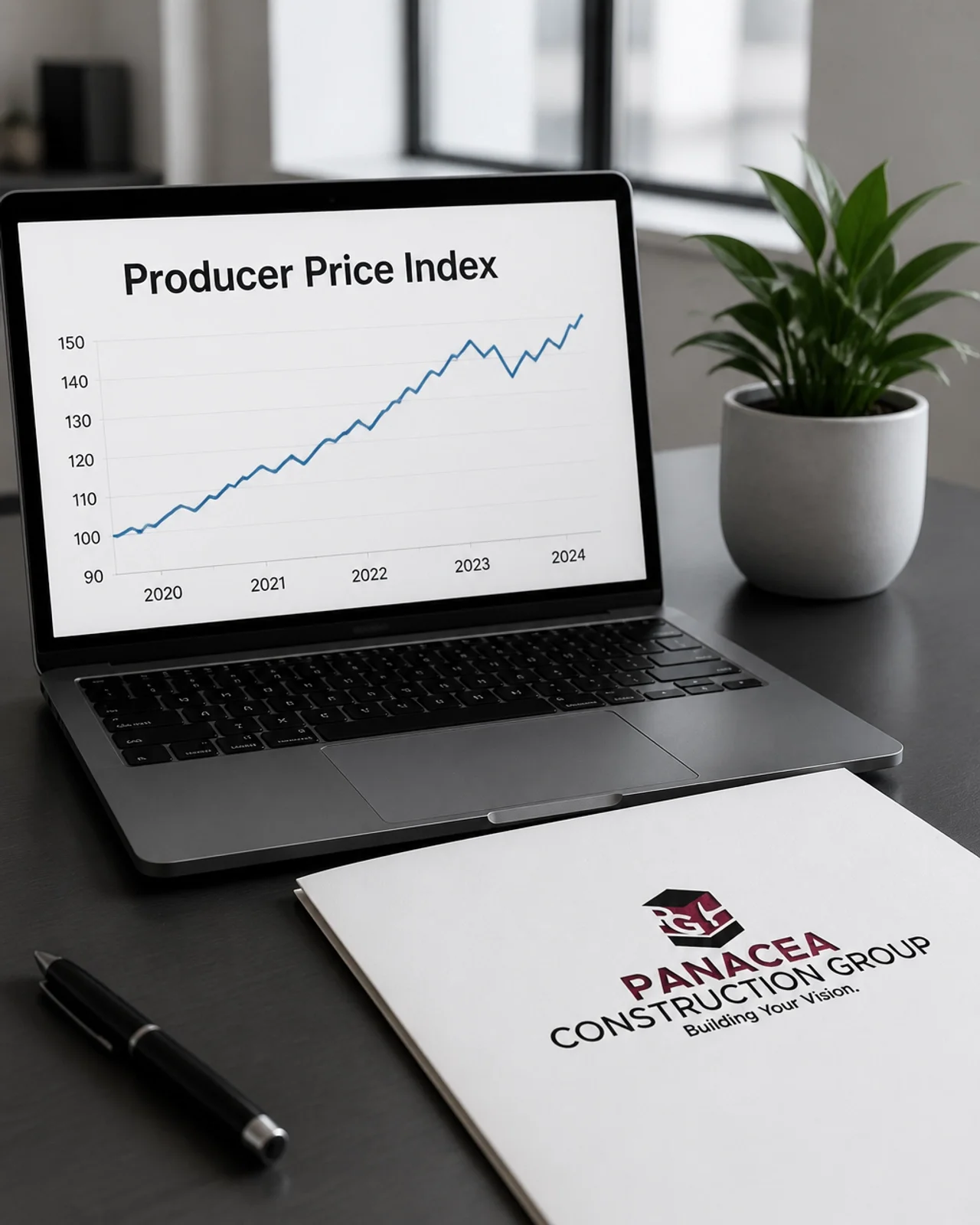
Effective management of EPA clauses requires the use of reliable, independent data sources. The Bureau of Labor Statistics (BLS) Producer Price Index (PPI) is the industry standard for tracking the cost of construction materials.

Relevant PPI Categories for 2026
Steel Mill Products: Critical for structural framing and reinforcement.
Ready-Mix Concrete: Essential for foundational and infrastructure projects.
Construction Labor: Tracked via the Employment Cost Index (ECI) to monitor wage growth.
Panacea Construction Group: Strategic Bidding and Contingency
Panacea Construction Group works closely with its partners to build realistic contingencies into every bid. Our goal is to maintain competitiveness while ensuring that our subcontractors are protected from unforeseen market shifts.
Our Bidding Process
Risk Assessment: Analyzing the specific materials and labor required for the project.
Clause Identification: Determining if the solicitation includes EPA provisions.
Collaborative Pricing: Working with qualified subcontractors to develop accurate cost estimates.
Value Engineering: Identifying alternative materials or methods to reduce cost exposure.
Subcontractor Best Practices for 2026
Subcontractors must take proactive steps to manage inflation risk during the pre-award and performance phases of a contract.
Documentation Requirements
Maintain detailed records of all material purchases and labor costs. If a price increase occurs, you must provide verifiable proof from suppliers or third-party indices to support a request for adjustment.
Communication and Communication
Early and frequent communication regarding cost volatility is essential. Notify Panacea Construction Group immediately if you anticipate significant price changes that may affect project schedules or budgets.
Use of Reliable Indices
Align your internal pricing models with recognized indices like the BLS PPI. This ensures that your bids are based on objective data that is recognized by federal contracting officers.